Key findings
01 — The DemandWhy does light industrial hiring never really stop?
Because turnover isn't a fixable bug in this market — it's the permanent operating condition.
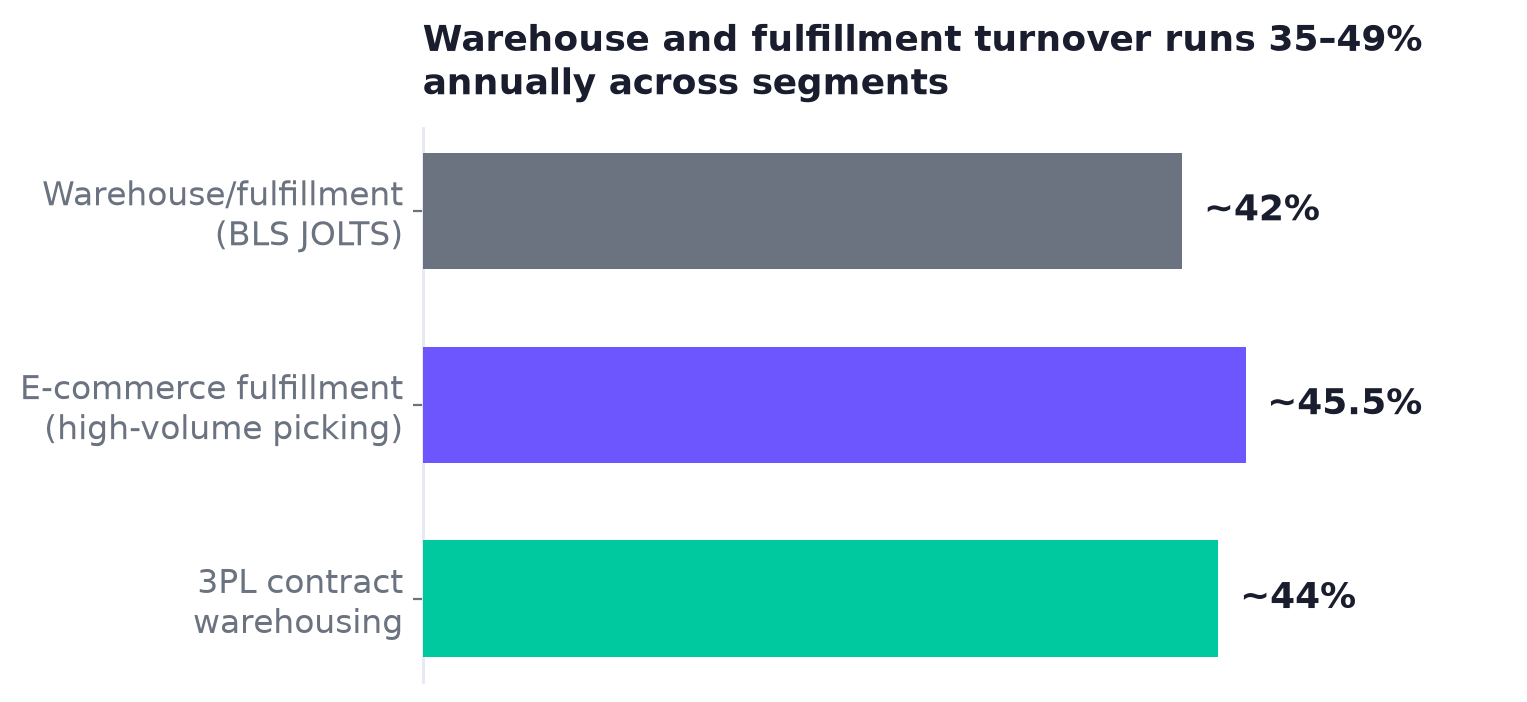
Light industrial roles are defined by structurally high churn: physically demanding, often lower-wage, and frequently short-tenure by design. Warehouse and fulfillment turnover consistently runs 35–49% annually, according to BLS JOLTS data for Transportation, Warehousing, and Utilities.1 Some individual facilities exceed 100% annual turnover, meaning the average headcount position gets refilled more than once a year.6 Average temp and contract assignment tenure is only 9–10 weeks — a staffing provider or in-house TA function is functionally always recruiting.4
02 — The ClockHow fast do the best candidates actually disappear?
In about ten days — which means any manual sourcing lag is a direct, quantifiable loss.
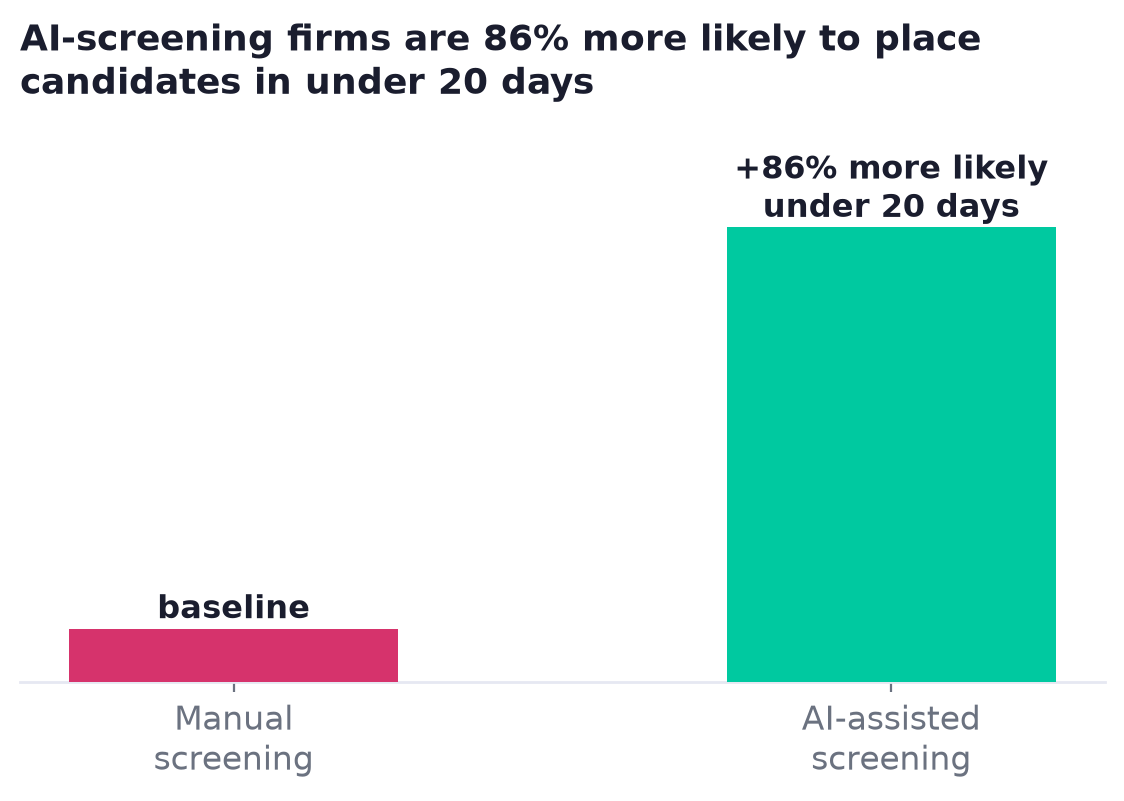
The average candidate leaves the pool within about 10 days of becoming available.7 Against that window, AI clearly wins: staffing firms using AI to screen candidates were 86% more likely to place candidates in under 20 days compared to firms relying on manual screening.5
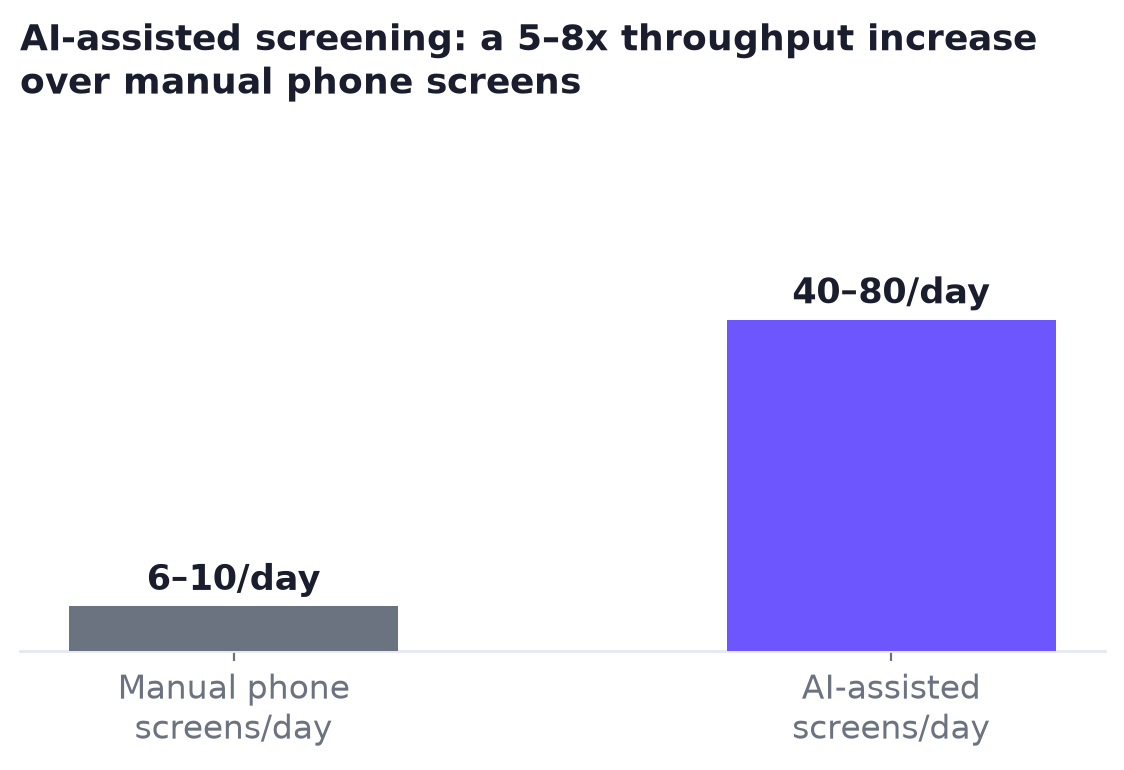
AI-augmented screening lets recruiters review 40–80 candidates per day versus 6–10 manual phone screens — a 5–8x throughput increase directly applicable to high-volume, low-complexity light industrial roles.8
03 — The Seasonal SurgeWhy does peak season punish slow starters so badly?
Because a handful of employers with sophisticated hiring infrastructure now capture nearly half of all seasonal demand.
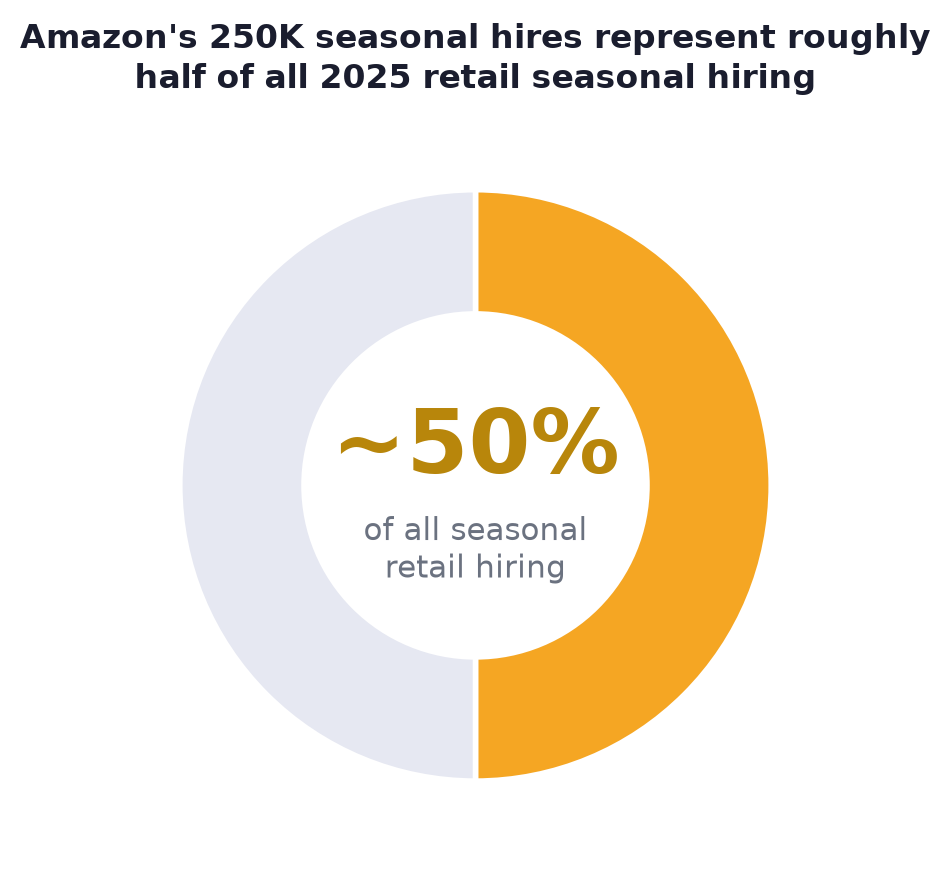
Amazon alone will hire 250,000 seasonal and permanent warehouse/logistics workers for the third straight year in 2025, even as overall retail seasonal hiring is projected to hit a 16-year low of under 500,000 positions — meaning a single employer captures roughly half of all seasonal retail hiring.2
Unstaffed peak-season warehouses saw a 47% increase in safety incidents and a 23-point drop in shipping accuracy, while facilities that began seasonal recruiting in August — rather than waiting until October — reported 67% fewer safety incidents and 41% better order accuracy.9
"With average tenure around 9–10 weeks, the position never truly closes — sourcing that resets every time a req reopens is sourcing that's always starting from zero."
04 — The Wage PressureWhat's quietly driving so much of the churn?
Wage competition against retail and gig work — and it moves the P&L in real time.
Average hourly earnings in Transportation and Warehousing reached about $31.52 as of July 2025, compared with $25.71 in Retail Trade — a gap that keeps upward wage pressure on warehouse operators competing for the same labor pool.10 Labor accounts for 50–65% of total warehouse operating costs, making wage competition the single largest controllable line item for operators.3
05 — The PlaybookWhat should a light industrial staffing desk do about it?
Five moves separate the desks that will win the next 24 months of light industrial hiring:
1. Compress sourcing-to-outreach to hours, not days. With candidates leaving the market in roughly 10 days, any manual multi-day sourcing lag is a direct loss of placements.
2. Start seasonal recruiting cycles 60–90 days before peak. Facilities that begin in August instead of October see materially fewer safety incidents and better order accuracy.
3. Build always-on pipelines, not per-req sourcing. With average tenure of 9–10 weeks, the position never truly closes.
4. Track and react to local wage competition in real time. Automated wage-benchmarking against competing local employers should trigger before turnover spikes, not after.
5. Regionalize the playbook. With the Southeast growing industrial staffing demand at 20%+ year-over-year versus flat West Coast/Midwest conditions, sourcing strategies should be tuned to regional labor-market tightness.11
This is precisely the model UPPER was built to run: autonomous, always-on, multi-channel sourcing that refreshes the local candidate pool continuously — so a light industrial staffing desk never resets to zero when the next req opens.
Get the designed PDF edition
The full report, formatted as a shareable PDF for your team and clients. Enter your work email and we'll unlock the download.
★ Download the PDFSources
- Bureau of Labor Statistics — JOLTS Table 22, Annual Average Quits Rates
- Reuters — Amazon to hire 250,000 workers during holiday season
- Stealth Agents — Warehouse and Fulfillment Staffing Costs 2026
- Einvoice Generator — Staffing Industry Statistics (ASA/altLINE data)
- Pin — Recruitment Statistics 2026 (Bullhorn 2025 GRID Report)
- GCCA/IARW — 2019 North American Warehouse Employee Turnover Survey
- Intervuebox — Staffing Firm AI Hiring Pipeline Gap 2026 (SHRM 2025 data)
- Outhire — Recruiter Productivity Benchmarks 2026
- Primero Staffing — Expert Seasonal Hiring Guide
- Employer EB-3 Visa — Warehouse Worker Turnover (BLS-sourced)
- StaffingHub / SIA — Reshoring and Data Centers Are Driving Industrial Staffing's Comeback
This report synthesizes third-party research current as of July 2026; figures are attributed to their original sources above. Some forward projections are inherently uncertain. UPPER edition H2 2026 — refreshed semiannually.